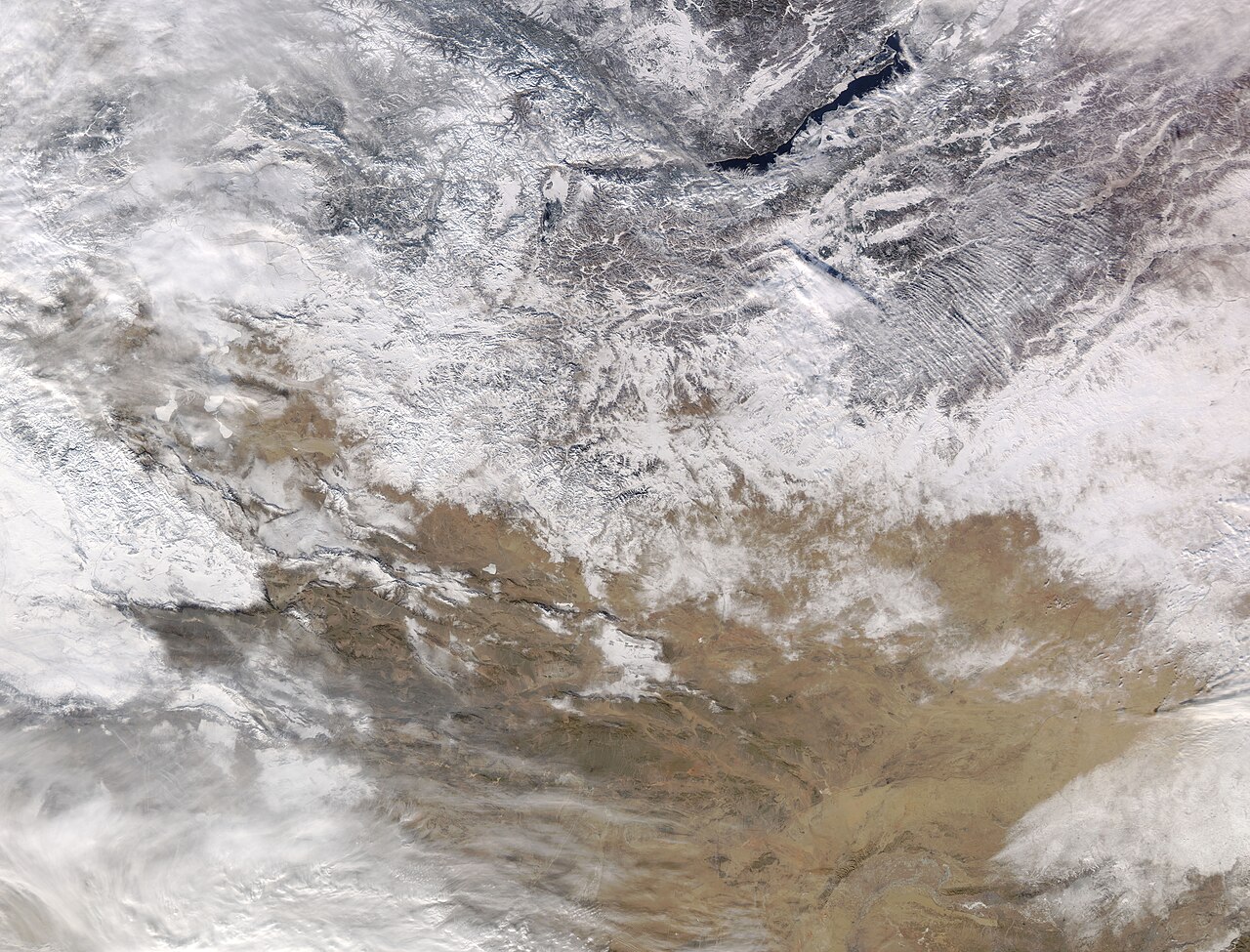
Wintering for livestock will be very difficult across 18 percent of Mongolia's territory in December, the state weather research institute said in its monthly dzud outlook, released on Nov. 25.
Conditions will be difficult on another 28 percent, moderately difficult on 34 percent and slightly difficult on 15 percent, the Information and Research Institute of Meteorology, Hydrology and Environment said, state news agency Montsame reported. Only 5 percent of the country faces no difficulty.
Difficult or very difficult conditions are expected in Bayan-Ölgii, Uvs, Khovd, Zavkhan, Govi-Altai, Bayankhongor, Arkhangai, Övörkhangai, Dundgovi and Dornogovi provinces, most of Ömnögovi, Khövsgöl and Bulgan, and parts of Sükhbaatar, the institute said.
A dzud is a harsh winter in which snow, ice or cold keep herds from grazing. It can kill livestock in large numbers, and herding still supports many Mongolian families.
The institute based the outlook on ground and satellite observations of drought and pasture, the yield and carrying capacity of winter and spring pasture for 2026-2027, deviations in temperature and precipitation from the norm, and snow depth.
It advised officials to focus on the provinces named, to follow short-, medium- and long-term forecasts and the updated dzud outlooks, and to prepare measures in advance in case conditions worsen.