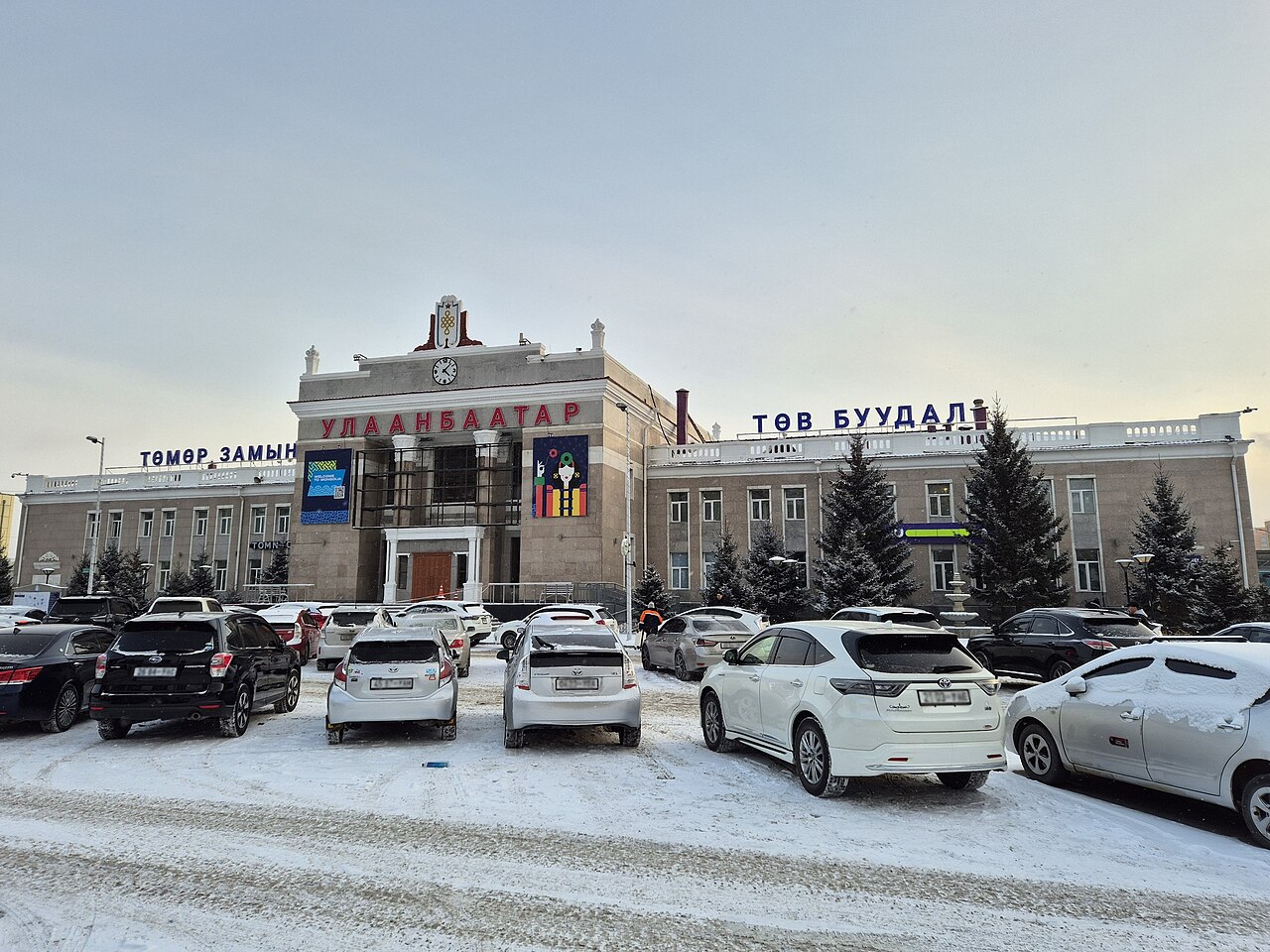
Prime Minister N. Uchral opened a 17.4-kilometer railway from Shine Ortoo to Tolgoit on Nov. 28, extending a freight bypass around Ulaanbaatar. The first train ran on it the same day.
State-owned Mongolian Railway built the line as a continuation of its 127.1-kilometer Bagakhangai–Khoshigiin Khondii–Emeelt railway, which opened in October. At Tolgoit, the new track joins the main line of Ulaanbaatar Railway, the jointly owned Mongolian-Russian company. Minister of Road and Transport Development B. Delgersaikhan attended the opening.
The link gives the Emeelt–Tolgoit stretch its own coal track, so coal trains can go around the city instead of through its center. The government said raw coal would no longer be carried through the city center from Nov. 28, with freight moving to the new route in stages.
Coal heats and powers the capital. Thermal Power Plants No. 2, 3 and 4, the Amgalan heating plant and the Nalaikh plant burn more than 5.8 million tonnes a year in 41 boilers, the government said. About 6.3 million tonnes of coal a year now travels through the capital.
The government expects more than 5 million tonnes a year of raw coal from the Baganuur and Shivee-Ovoo mines, roughly the city's yearly use, to move outside the center. It said 34 kinds of dangerous cargo, about 2.5 million tonnes a year, are also to stay out of the center.
Level crossings in the city now close to traffic for an average of 2 hours 24 minutes a day, and the government expects that to fall by up to 90 percent. It said the bypass would ease the load on four main road-rail crossings and 14 siding crossings, and keep up to 1,800 heavy trucks a day off city roads.
Each month, 400 to 500 wagons stand at Ulaanbaatar and Tolgoit stations for five to 10 days, which the government called a high safety risk.
Uchral said the whole bypass, which he put at 143 kilometers, cost $555 million, a figure from its feasibility study. He said it was paid for from the company's own budget, bonds, and loans from the Development Bank of Mongolia and commercial banks.
Work on the Shine Ortoo–Tolgoit section began in August and took about three months, with 13 Mongolian companies and more than 400 workers, the government said. The line was rebuilt on old Ulaanbaatar Railway track.
The bypass can carry 30 million tonnes a year. The government plans to move 20 million tonnes on it in the first year and up to 25 million later. Mongolian Railway plans a combined freight terminal at kilometer 87.8 of the line and a terminal for dangerous goods at kilometer 102.
In his speech, Uchral recalled the explosion at Ulaanbaatar's Dunjingarav junction and said dangerous cargo must stop going through the city center. On the night of Jan. 23–24, 2024, a truck carrying liquefied natural gas hit a car there and exploded.
Seven people died, three of them emergency workers, and nine were injured, state news agency Montsame reported in June 2024. The blast burned 36 vehicles and three buildings and caused about 5.4 billion tugrik in damage to 228 people and 15 businesses, the agency reported, citing the Prosecutor General's Office.