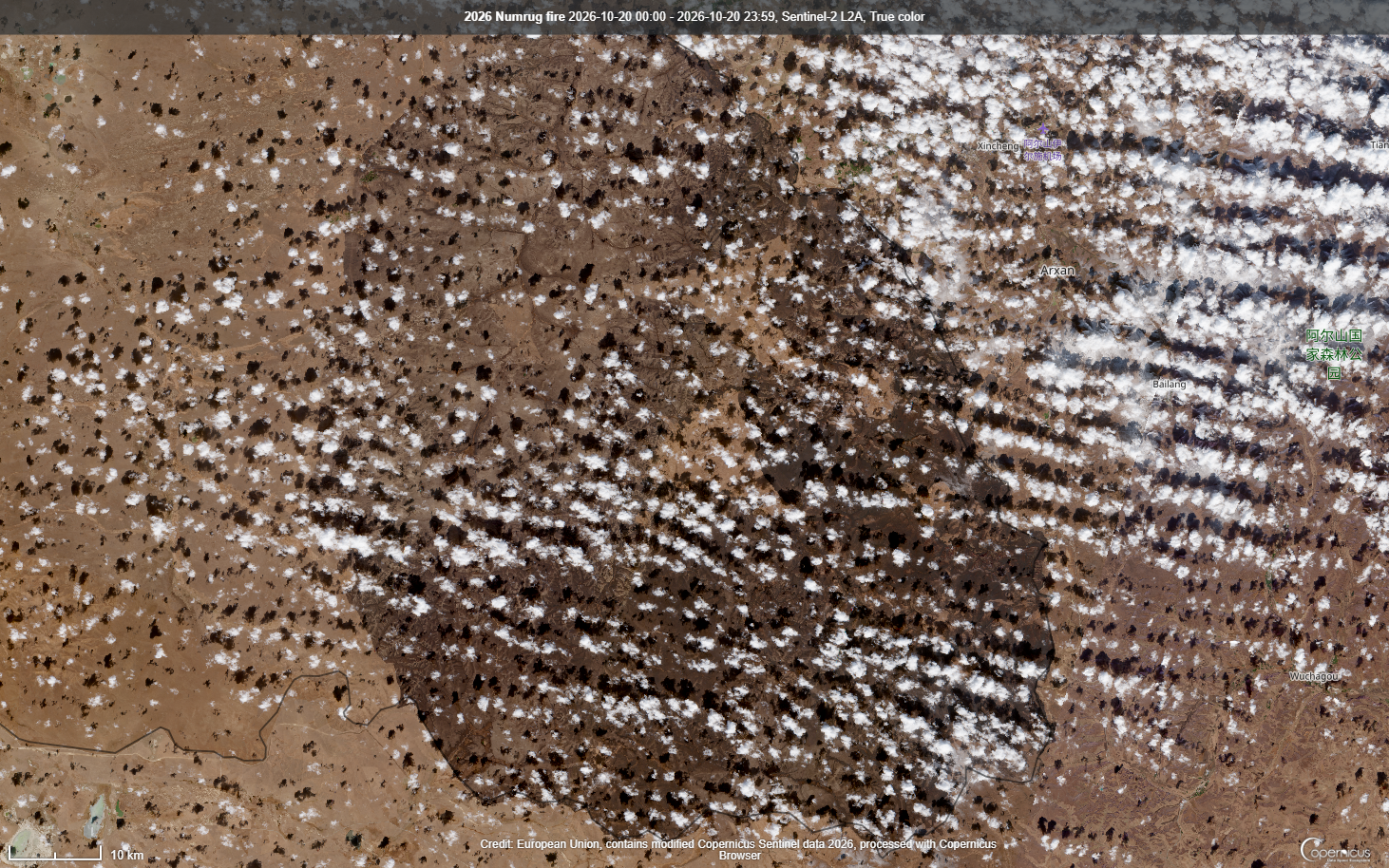
Mongolia's environment ministry has begun work to help wild animals through the winter in the Numrug Strictly Protected Area, where a fire in October burned most of the reserve, the ministry said on Nov. 12.
The Ministry of Environment and Climate Change and the reserve's administration have started what Mongolian officials call biotechnical measures: protecting habitat and putting out feed. The work will go on in stages, the ministry said in a statement carried by the national broadcaster MNB and iKon.mn. It gave no figures.
The fire began on Oct. 8 in Khalkhgol district of Dornod province, in Mongolia's far east. By the government's preliminary count it covered about 80 percent of the reserve. Biologists found animals crowded into the unburned parts.
On Nov. 4 the cabinet set aside 629 million tugrik from its reserve fund to buy hay and fodder and carry it to the animals, MNB reported. Seven feeding points were mapped deep inside the reserve, according to iKon.mn.
A new local group says the help is too slow. B. Oyunbileg, head of the non-governmental organization Khalkh Numrug Nutgaa Sergeeye ('Let's restore our Khalkh Numrug'), told reporters on Nov. 11 that the state money had not yet reached the site, the daily Unuudur reported. The government and the ministry have still not established the damage a month after the fire, the group said.
Residents and local businesses have delivered a first 2,000 bales of hay, Oyunbileg said. The group puts the need at 25,000 to 30,000 bales this winter and wants hay at the feeding points before the end of November. It has opened a donation drive.
The ministry did not answer the criticism in its statement. Environment Minister Ts. Sandag-Ochir said on Nov. 4 that the final damage report was due on Nov. 16.
Surveys in 2018 and 2022 estimated that more than 3,000 red deer, more than 300 moose and more than 10,000 roe deer lived in and around the reserve, the government said.