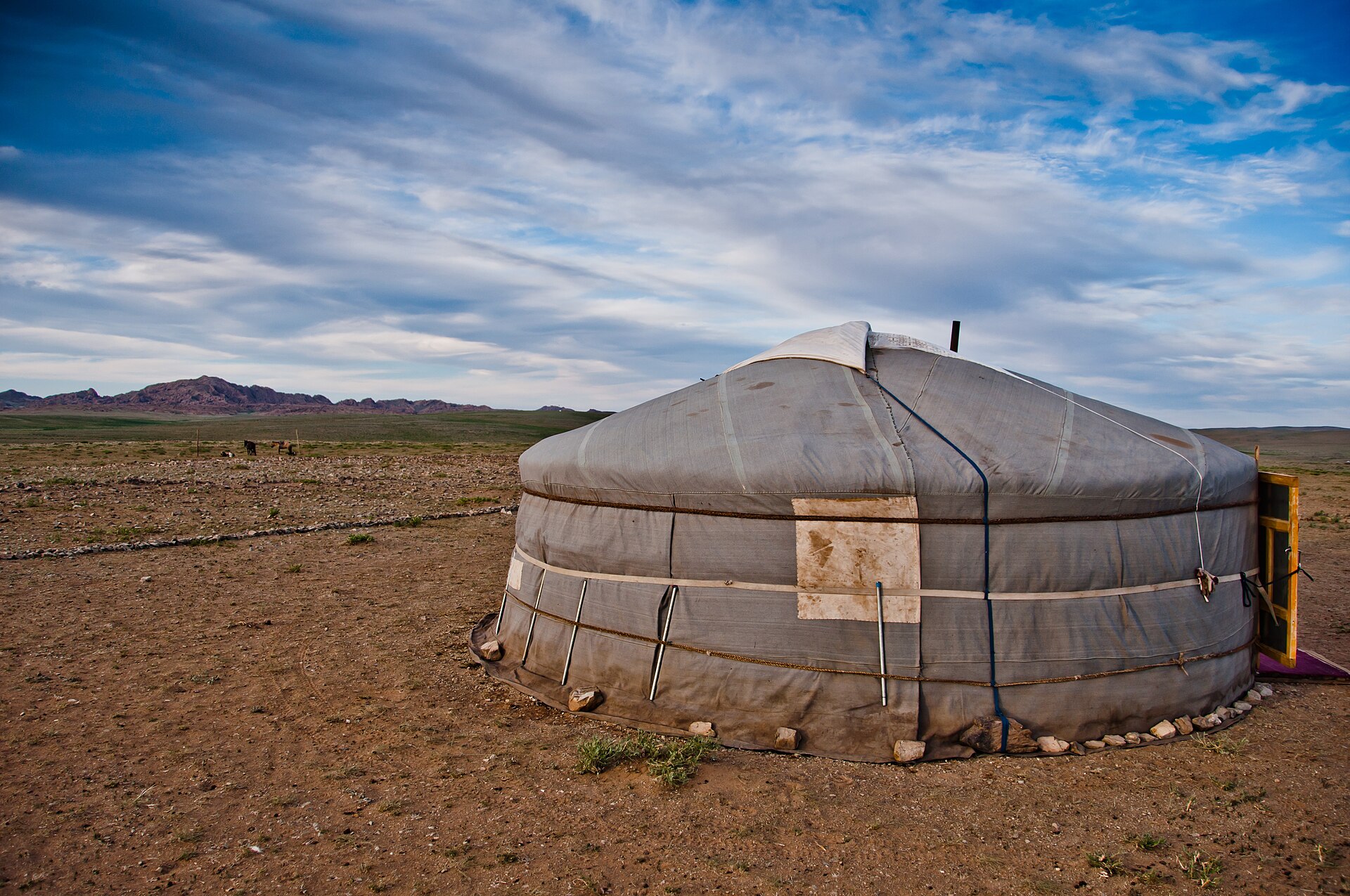
A ger is a round tent on a light wooden frame. Its walls are an expanding lattice. Long roof poles rise from the walls to a wooden ring at the top, the crown, which lets in light and lets out the smoke of the stove.
Layers of felt, made from sheep's wool, cover the frame and keep out the cold. A canvas cover goes on top.
The door traditionally faces south. Inside, the stove stands in the centre, under the crown. The place of honour, for elders and guests, is at the back, opposite the door.
Herding families move between summer and winter pastures, and the ger moves with them. It comes apart into pieces that can be carried by camel, yak or truck.
Gers are not only found in the countryside. On the edges of Ulaanbaatar, whole neighbourhoods of gers house families who have moved to the city.
UNESCO added the traditional craftsmanship of the Mongol ger and its customs to its list of the world's intangible cultural heritage.