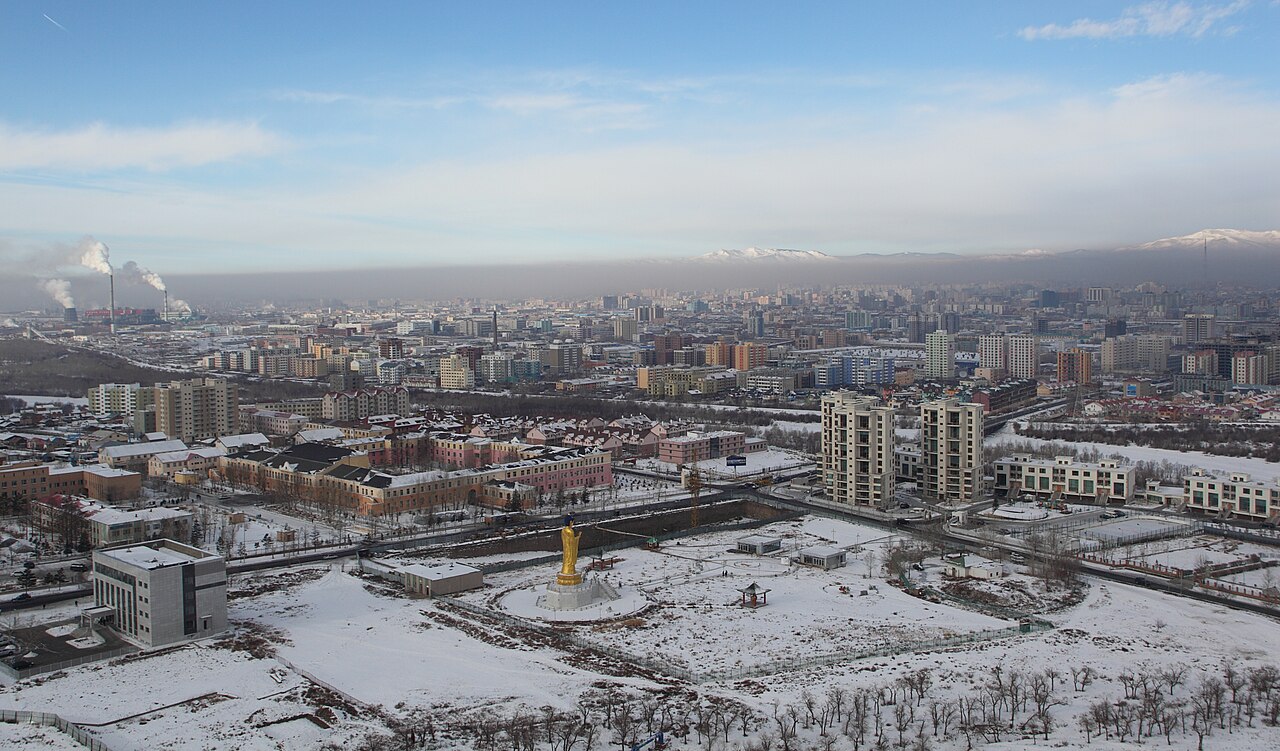
Ulaanbaatar is the coldest national capital in the world on average. Its winters are long, dry and bitterly cold, and on many January nights the temperature falls below minus 30 degrees Celsius.
The city sits in the valley of the Tuul River, about 1,350 metres above sea level and far from any ocean. Mountains ring the valley, with Bogd Khan Uul to the south.
In winter a huge mass of cold, heavy air, the Siberian High, settles over Mongolia. Skies stay clear and winds stay light, so the ground loses its heat at night and the cold air pools in the valley.
That still, cold air also traps smoke. On calm winter days a layer of warmer air sits above the colder air in the valley, and smoke from stoves, power plants and traffic cannot rise through it. This is why the city's winter smog is so heavy.