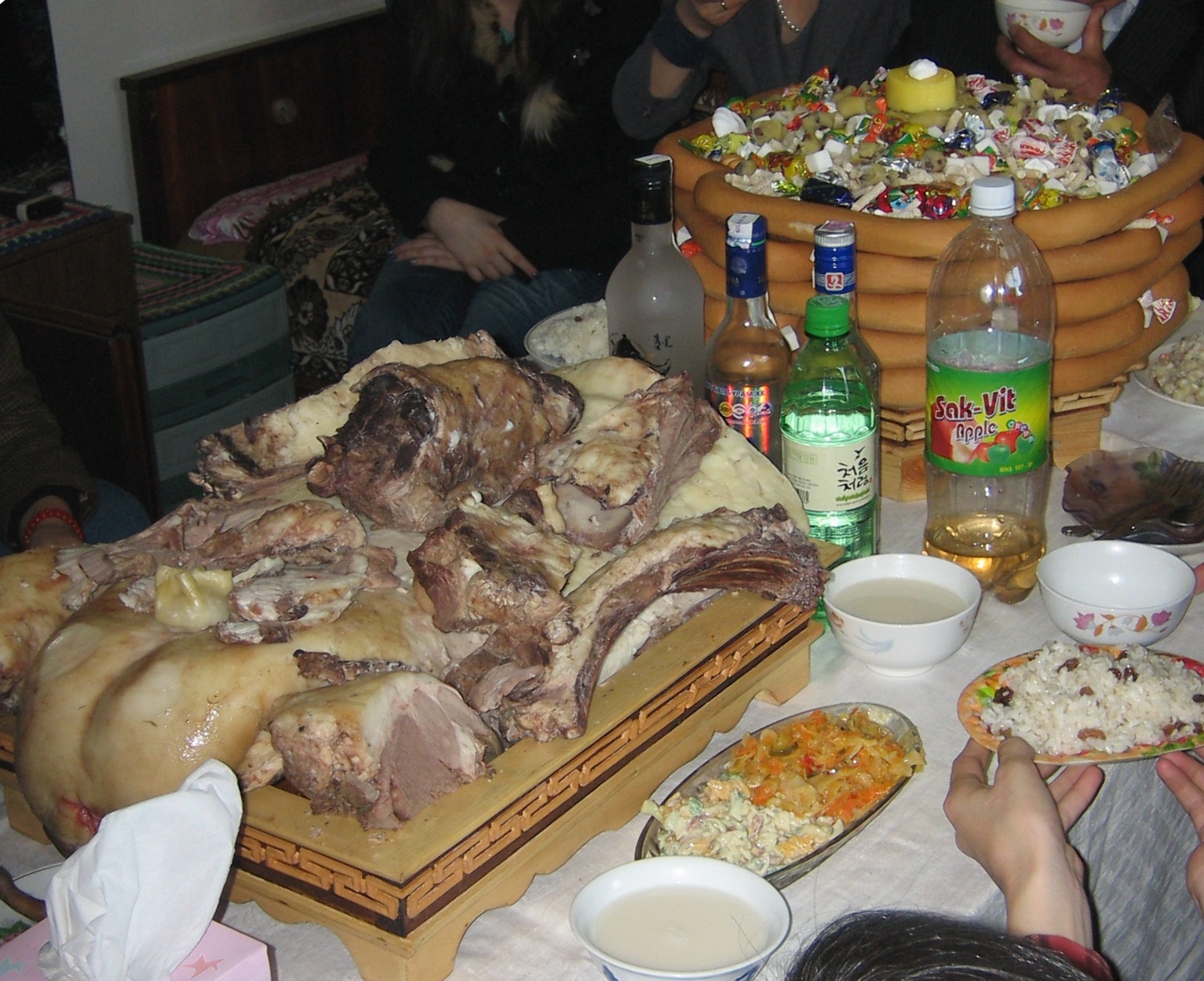
Tsagaan Sar means "white moon". It is the first day of the year in the Mongolian lunar calendar, and it usually falls in late winter.
The day before is called Bituun, the name for the dark moon. Families clean their homes thoroughly, and herders clean their animals' shelters, to meet the new year fresh. In the evening, families see out the old year with a meal of dairy food and buuz.
Buuz are steamed dumplings filled with meat. Families often make hundreds of them in the days before the holiday.
On the morning of Tsagaan Sar, younger people greet their elders with the zolgokh. They stretch out their arms with open palms, a sign of no bad intention, and ask "Amar baina uu?", "Are you in peace?"
The festive table holds a tower of traditional biscuits stacked on a large dish, along with mutton, rice with curds and dairy products. For days afterwards, people visit relatives and friends to share the new year.