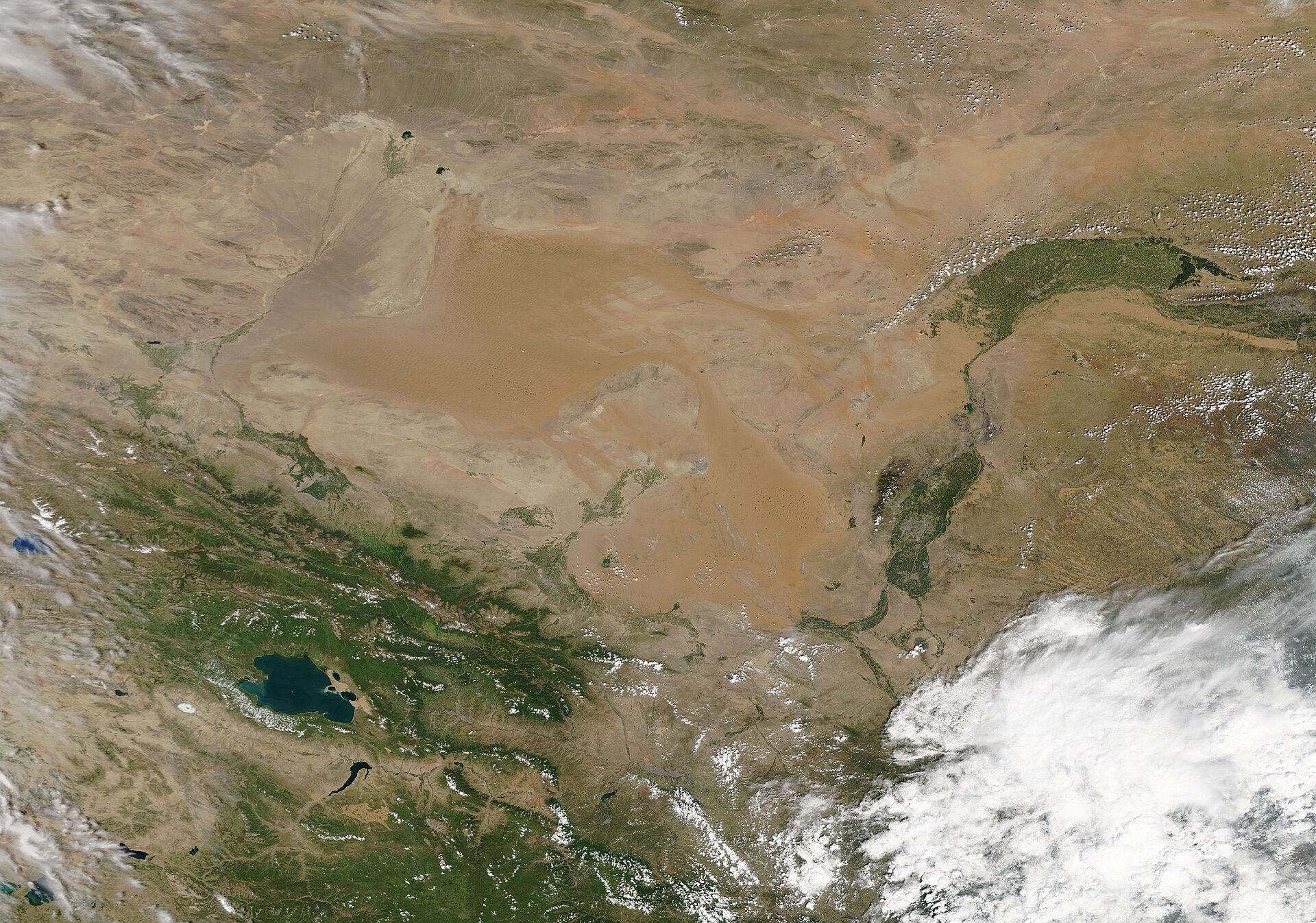
The Gobi Desert stretches across southern Mongolia and northern China. To its north lie the grasslands where Mongolian herders have raised animals for thousands of years.
Those grasslands are under strain. Since 1940, Mongolia's average temperature has risen by around 2 degrees Celsius, about twice the rise for the world as a whole. Many rivers and lakes have dried up, and dry years have become more common.
At the same time, herds have grown. After 1990, families kept more animals, especially goats. Too many animals on dry pastures strip the grass and expose the soil to wind.
Harsh winters, called dzuds, have become more frequent and have killed millions of animals. Each loss pushes more herding families towards the cities.
Bare land also feeds dust storms in spring, which can reach as far as China and Korea. Mongolia is planting trees and trying to manage pastures better, but the task is huge.