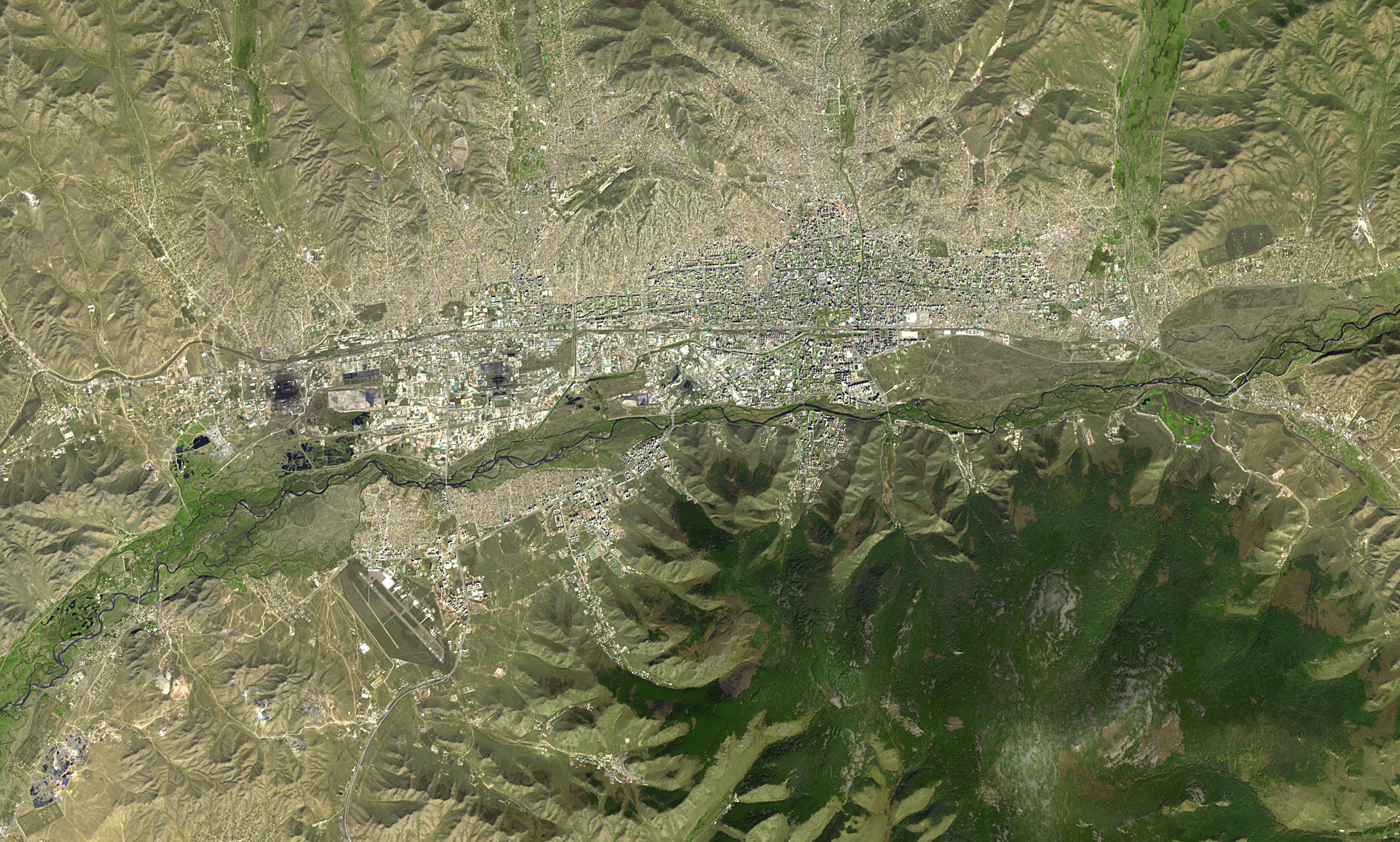
Mongolia's Supreme Court has ruled that part of the land allocated for the "Aqua Garden" development in Ulaanbaatar was granted illegally because it lies inside the special protection zone of the Dund River, the court said in a summary of its Nov. 11 ruling.
The case was brought by Onch Shiidel, a non-governmental organization, as a public-interest lawsuit. It named the capital city's governor, the Ministry of Urban Development, Construction and Housing, the city's chief architect and a state-owned construction development center.
The group asked the courts to stop the city from granting land for buildings inside water protection zones, which Mongolia's Water Law sets aside along rivers.
A first-instance court threw out the claim. On appeal, a higher court annulled the parts of two land plots that overlap the protection zone under a 2022 order by the capital's governor. The plots are held by M and G Construction LLC. The appeals court also suspended the chief architect's 2022 planning brief for the site for six months, until a new one is issued.
The Supreme Court went further on Nov. 11. It ruled that the overlapping part of the company's third plot had also been granted illegally, and kept the rest of the appeals ruling.
According to the court, the governor changed the land's use in 2018. The 11.8 hectares had been granted in 2013 "for green space." Most of it was re-zoned for services, a water park and a sports complex, and parts of that change broke Article 22.2 of the Water Law, the court found.
The court's summary did not say what happens next to construction on the site.