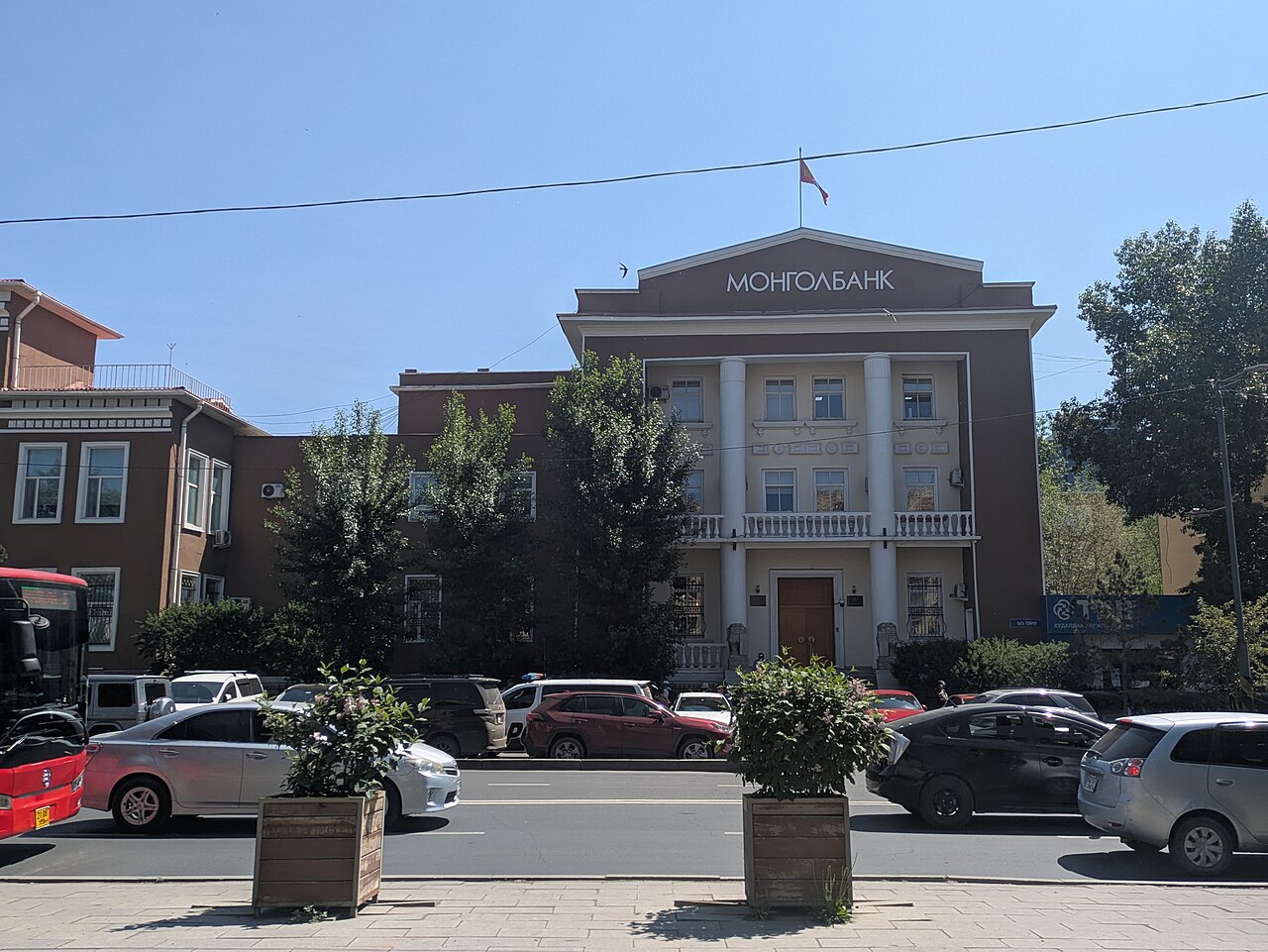
Mongolia's parliament on Nov. 20 adopted the central bank's monetary-policy guidelines for 2027, a framework of 14 measures that includes two multiyear government bond programs.
The guidelines take the form of a resolution of the State Great Khural, Mongolia's parliament. The Bank of Mongolia drafted them, and its governor, S. Narantsogt, submitted them to parliament.
The guidelines aim to stabilize inflation at about 5 percent over the medium term, the central bank said. When the draft was submitted, Narantsogt said it set a target of 6 percent for 2027 and 5 percent, plus or minus 2 percentage points, over the medium term.
The guidelines also commit to a flexible exchange rate for the tugrik, Mongolia's currency.
They provide for at least 1 trillion tugrik in government securities a year in 2027–2030. The stated purpose is to limit growth in the money supply and to develop the market for government securities.
A second program calls for the government to issue at least 1 trillion tugrik in securities a year in 2028–2032, to be held by the central bank. They are meant to cover the bank's capital shortfall from quasi-fiscal operations — government-style spending and lending carried out through the central bank.
The bank's accumulated losses over 2012–2025 reached 6.9 trillion tugrik, leaving a capital shortfall of 4.8 trillion tugrik, local media reported.
The guidelines schedule preparations in 2027 to move the subsidized mortgage program from the central bank to the government, with a full handover in 2028. The central bank said existing borrowers' contracts and interest rates are to remain unchanged.
The framework also envisages a law barring quasi-fiscal programs from being run or financed through the central bank. It calls for gradually ending the requirement that state-owned mining companies sell all their export foreign-currency earnings to the central bank.
These are planned reforms under the adopted guidelines, not changes already in force. The resolution says its implementation will be assessed regularly and reported to parliament.