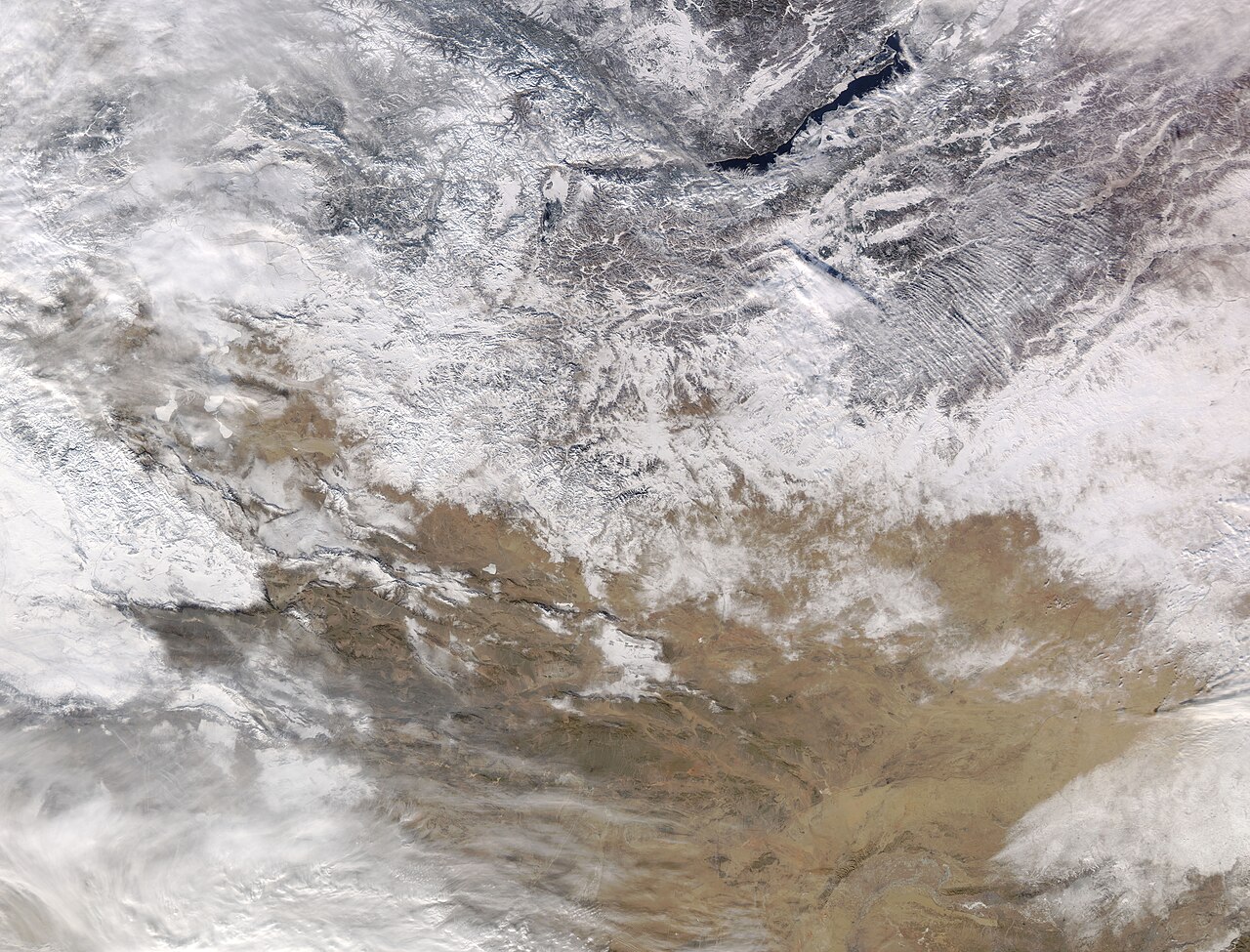
Some 290 of Mongolia's 330 soums, or rural districts, face a medium or higher risk of dzud this winter, according to a general risk assessment reported by news website News.MN on Nov. 19.
A dzud is a severe winter in which large numbers of livestock die from hunger and cold. Mongolia's herders keep their animals on open pasture all year.
Eight soums are at very high risk and 35 at high risk, said Col. D. Baasansuren, head of the risk management department at the National Emergency Management Agency. The assessment puts another 247 soums at medium risk and 40 at low risk. The body that carried it out was not named.
Seven of the eight very-high-risk soums are in Bayan-Ölgii province, in Mongolia's far west: Altai, Tsengel, Nogoonnuur, Ölgii, Buyant, Sagsai and Ulaankhus. The eighth is Tes in Zavkhan province.
Baasansuren also named Sagil, Malchin, Naranbulag and Tsagaan Khairkhan soums in Uvs province, and the north of Zavkhan province, as areas at high risk.
Among provinces, Bayan-Ölgii, Khövsgöl and Govisümber scored in the high-risk band, while Khentii and Orkhon were rated low. Snow covered 17 percent of the country at the time of the report.
Baasansuren warned that the "iron dzud" of the 2023–24 winter could happen again. That winter, heavy snow in November was followed by a thaw, and the snow refroze into a crust of ice that animals could not graze through, he said.
He said conditions could worsen from December 2026 through February 2027.