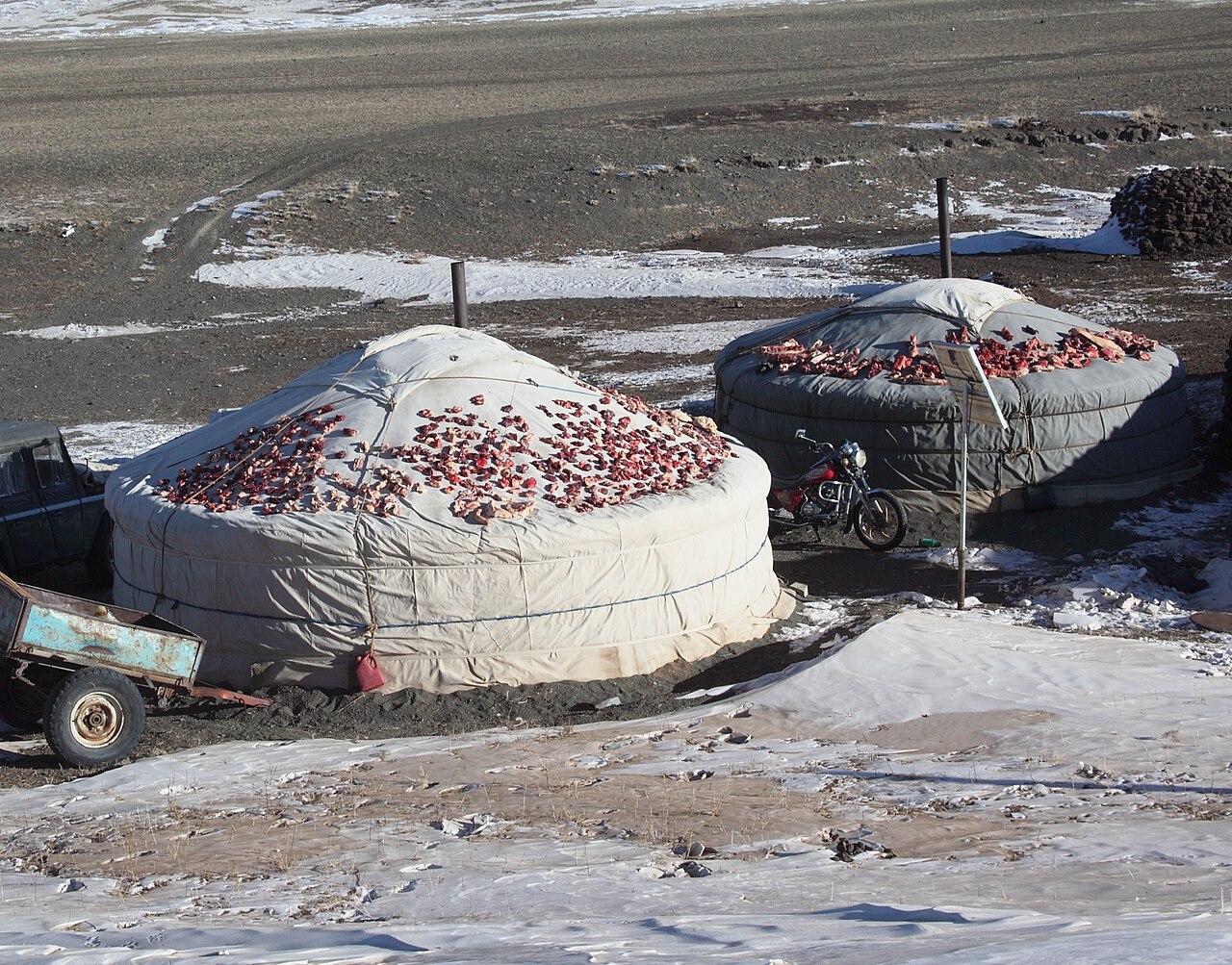
Mongolia's government has stocked 3,091 tonnes of meat for a reserve meant for Ulaanbaatar's residents in spring, its press office said. It gave the figure after Prime Minister N. Uchral visited two meat companies on Nov. 14.
The press office's statement was carried by the state broadcaster MNB on Nov. 15. News.MN, which reported the same figure, said the reserve is for spring 2027.
Uchral inspected the stockpiling at the two companies, Deltafoods and Domog Khuns. Domog Khuns has 510.2 tonnes in storage, News.MN reported.
The government has decided to stock 15,000 to 20,000 tonnes of meat and 12,000 tonnes of potatoes and vegetables. The aim is to prevent shortages and sudden price rises, the statement said.
So the meat stocked so far is less than a quarter of the target. Potatoes and vegetables are further along: 11,130 tonnes have been collected from more than 80 companies and growers, or 92.8 percent, the statement said.
The meat is paid for in three ways: soft loans from commercial banks, the companies' own money, and bonds, the statement said.
Commercial banks have approved 86.7 billion tugrik in soft loans to 13 companies, the statement said. The companies have signed contracts that let the state oversee their meat supply.
Those contracts cover 4,422.9 tonnes, and 69.8 percent of it has been delivered, News.MN reported.
Four more companies are stocking 1,580 tonnes with their own money, News.MN reported. That puts 17 companies under contract for 6,002.9 tonnes.
Six companies have asked Ulaanbaatar's city government to finance 4,800 tonnes through bonds, News.MN reported. Even with those, the total would reach 10,802.9 tonnes, below the 15,000-tonne minimum.
Separately, a 2026 budget amendment set aside 120 billion tugrik for the state to buy strategic and essential food reserves, the government said. Ts. Iderbat, the minister of food, agriculture and light industry, gave the same figure, News.MN reported.
Uchral warned that the problems of last spring must not happen again, the statement said.
Then, reserve meat ran short, and some businesses bought meat in bulk from markets rather than from herders in the countryside. Not all of the meat stocked reached the market.
Uchral ordered officials to monitor the stockpiling every day. Veterinary and inspection agencies are to check, with electronic records of origin, that the meat really comes from herders.
Purchases, stocks and origin data are to be recorded in the government's dashboard system, dashboard.gov.mn. News.MN said a "Meat reserve" section of the dashboard and the E-Barimt electronic receipt app show where suppliers sell the reserve meat.
The spending of the 120 billion tugrik, and of the soft loans and other support, is to be made public, the statement said.
The reserve meat is to be sold in stages in spring, below market prices, in all of Ulaanbaatar's districts, the statement said. Reselling and artificial shortages are not to be allowed.
The governors of provinces and soums, the rural districts within them, were told to build up their own reserves.
The statement did not say when sales will begin.
Meat prices are a large part of Mongolia's rising cost of living. Meat and meat products cost 44.4 percent more in October than a year earlier, the National Statistics Office said.
Annual inflation reached 13.4 percent, iKon.mn reported, citing the statistics office.
Herders and cooperatives from 21 provinces will sell meat and dairy products directly to buyers in Ulaanbaatar, iKon.mn reported on Nov. 13. The "Winter Provisions 2026" fair will run outside the Central Stadium from Nov. 25 to Nov. 29.