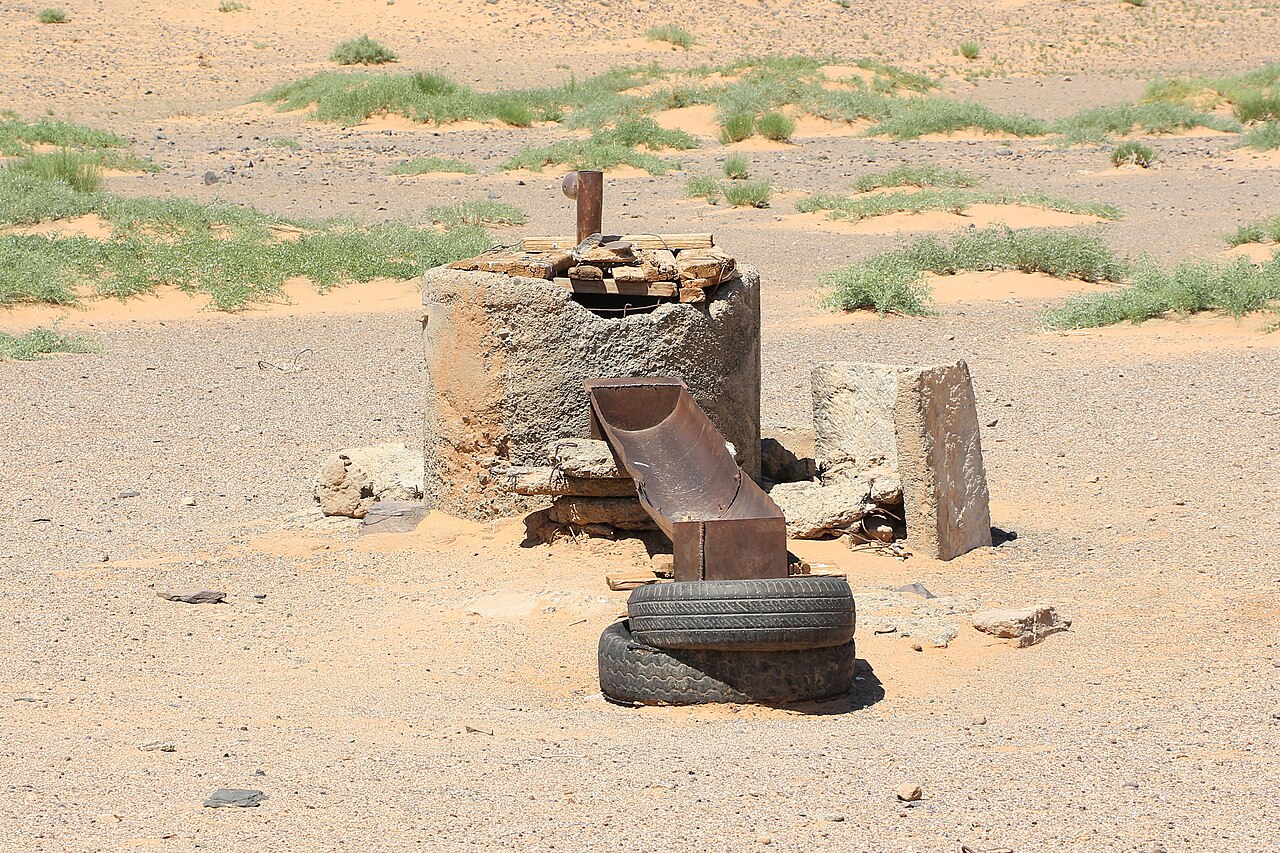
Water from almost two in three deep wells tested in Mongolia's Gobi failed the national drinking water standard for fluoride, Mongolian Academy of Sciences researchers found. The news site iKon.mn drew attention to the 2024 study on Nov. 13.
Researchers at the academy's Institute of Chemistry and Chemical Technology tested water from 144 deep wells in 44 districts of Dundgovi, Dornogovi and Ömnögovi provinces. They compared it with Mongolia's drinking water standard, MNS 0900:2018, which sets fluoride at 0.7 to 1.5 milligrams per liter.
In all, 91 wells, or 63.2 percent, fell outside that range, the paper says. Going by its figures for each province, 68 wells had more fluoride than the standard allows and 23 had less than it requires.
Fluoride was above the maximum in 64.8 percent of the 54 wells tested in Dundgovi. The share was 56.8 percent of 44 wells in Dornogovi and 17.4 percent of 46 in Ömnögovi. In Ömnögovi, 45.7 percent of wells had too little.
The highest level found, 7.18 milligrams per liter in Dundgovi, was almost five times the standard's maximum.
The cause is natural, the authors wrote. Deep groundwater reacts with the rock around it, and its fluoride content depends on the local geology.
The paper links the high levels in Dornogovi and Dundgovi to the fluorite belt of eastern Mongolia. The two provinces hold 30 percent and 35 percent of the country's known fluorspar reserves, it says.
Water high in fluoride damages tooth enamel, iKon.mn wrote.
The paper was published in December 2024 in the Bulletin of the Institute of Chemistry and Chemical Technology.
A revised Water Law, submitted by 13 members, is before the State Great Khural, Mongolia's parliament. A vote on whether to take it up was put off on Nov. 13, when the Mongolian People's Party group asked for a five-day break, iKon.mn reported. Its sponsors say the bill puts people's drinking and household needs first when water use is decided.